Thursday, 9 February 2012

Question 1 - In what ways does your media product use, develop or challenge forms and conventions of real media products?

A thriller is a movie genre which uses mystery and tension to create anticipation and suspense. Thriller movies are designed to keep the audience constantly alert and on edge because anything could happen. Thrillers usually contain some sort of twist in the story which is usually unexpected and changes the overall outcome of the thriller. There are numerous sub genres of thriller movies all of which are based on a different basic storyline, for example there are crime thrillers, mystery thrillers and psychological thrillers which are probably the most common type of thriller because of there popularity.

Thriller movies also use numerous different camera angles and shot types to get certain information across to the audience, for example camera angles can be used to show power or weakness within characters. Power or Weakness of characters can be shown to the audience by using different camera angles, if they wanted to portray a character as powerful they would lower the camera so that it is looking up at the character, if they canted to make a character appear weak they would raise the camera and have it looking down on the character. Although this is a basic method it is widely and frequently used because it is such an easy way of differentiating characters power.
Also a very common convention used in thriller movies is showing the emotion and reaction of a character. Showing the characters emotion is a very important part of a thriller movie because thriller movies are designed to mess with your mind. To show the audience a characters emotion they will usually use a close up or extreme close-up of the characters face. This is very effective because it allows the audience to partly understand what the character is thinking and in some situations it can create an emotional attachment. The same method of using a close-up or extreme close-up can also be used to show the reaction of a character. In a thriller it is very important to capture the characters reaction because it is one of the best ways of showing there state of mind, for example if someone is scared and they are startled they are going to have a much bigger reaction than someone who is feeling fine.
Editing is also a very large part of thriller movies because editing allows lighting, sounds, video effects, titles and clip transitions to be added. Lightings, sounds, video effects and clip transitions are very important to thriller movies because they are some of the key conventions which can be used to edit the way a thriller movie is portrayed.
Lighting is very important because it can be used to completely change the atmosphere of a scene, for example the producer/ director wanted the scene to be as creepy/ eerie as possible they would darken the scene so that the audience cannot see everything but because most people relate darkness to danger and horror etc. Sound is also very important because it can be used to build tension and drama, for example if something big is going to happen dramatic music can be added into the scene to prepare the audience for what is going to happen but to also add tension.
In most thrillers the clip transition is usually a straight cut because it is quick and straight to the point. Also if used in such a way straight cuts can be used to build tension and suspense, for example changing the camera shots quickly can create the effect that something important is going on and it can create the effect of speed, used frequently in chase scenes and fighting scenes. Different clip transitions can be used to give different effects, for example the fade to black/ white or fade from black/ white is quite popular within thriller movies because it can give the effect of time changing or location changing.
Video editing plays a massive part in creating thriller movies because it allows the footage to be edited so that it appears as the director/ products wants it to be. Also having the capability of being able to edit footage is a large advantage because it takes some of the stress of filming away, for example the lighting can be edited on a computer. Video editing also allows effects to be added over the footage, for example footage can be edited so that it meets the requirements of the director/ producer. Certain effects can be used to build up tension because it can completely transform the atmosphere of a scene, for example washout tinting sucks the colours out of the footage and makes it much more eerie and creepy.
Mise-en-scene is very important to all movie genres but it is also widely used in thriller genres. Mise-en-scene can range from anything from props, clothing, background and foreground props etc. Background and foreground props are items which are placed a scene to build up the atmosphere and make the scene appear more realistic. They are very important to thriller movies because thriller movies are all about building up the tension and atmosphere and one of the best ways of doing that is by building up an effective surrounding. Props are also very important in thriller movies because different props can be used to create different types of tension and action, for example a weapon creates drama and tension because the audience knows what the prop is capable of but they don’t know how the character is going to use it. Clothing is also a very important part of thriller movies because it allows the audience to differentiate and learn about a character purely through what he is wearing, for example if a character is wearing a jacket, shirt and tie the audience will know that the character is well organised and has probably been to work or somewhere important.
What key elements does a thriller opening need?
All thriller openings need to be able to grab their audience’s attention from the start. To do this they will usually uncover a large part of the story straight away to keep the audience on edge, for example in the movie ‘Memento’ the first scene is actually how the movie ends. They do this because then the audience wants to watch on because they want to know what happened previously which lead to ending. Although this is a good convention it is still not enough to keep the audience fully engrossed in the movie, to do that they need to use methods such as camera angles/ shots, lighting, sound, editing, mise-en-scene, narration ect to build up a good atmosphere so that the audience wants to watch on. Most of the techniques which I have just listed are covered above in detail and below I have mentioned how we used the techniques in our own thriller opening. Below is a list of key elements which are needed to create an effective thriller opening...
  • A thriller movie opening should capture the audience’s attention and imagination, to do this usually something important or interesting will happen early on in the film.
  • The opening scene to a thriller should be very atmospheric, this grabs the audiences attention but it also gives the audience an insight into what sort of movie it is going to turn out to be, for example if it is a horror thriller then the opening scene may be dark and dingy with scary sound in the background to prepare the audience for what is going to happen.
  • It is also very common for the main characters to be introduced early on in a thriller movie. This technique is used because it allows the story to start early on and it gives the audience time to learn about the character and how they feel/ react.
What conventions have we used in our thriller
 We decided to make a crime thriller because they are slightly easier to create compared to mystery and psychological thrillers which can be quite hard to create because of the effects needed. Crime thrillers are much easier to create because there are much more situations which can be incorporated and locations/ props are much easier to organise and incorporate into the thriller. Also because it was easier to set out and organise it allowed us more time to make the thriller opening as realistic as possible. To make it as realistic as possible we tried to write our script so it was as professional as possible and it all made sense. When we were filming we also repeated scenes over and over until we were happy with the outcome and it was as realistic as it could be.
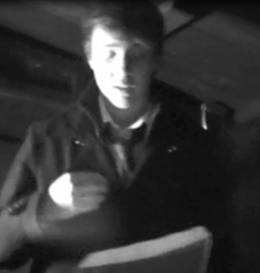
 In our thriller we used a number of different camera angles because we wanted to show the scenes from as much angles as possible and keep the audience engaged and interested which is much harder to do if the same camera angles are repeated over and over; we tried to use camera angles which portrayed the hostage as weak and vulnerable and angles which portrayed the interrogator as if he was in control. To do this we used angles which either looked up at the interrogator from the hostage’s perspective or angles which looked down at the hostage from the interrogators perspective. We also used camera shots which allowed the viewer to see the expressions on the hostages face as he was being questioned; this allows the viewer to get an insight into how the hostage is feeling and what he is going through there mind, it also allows them to get emotionally attached to the character and understand what they are feeling inside. Also other common camera shots we used included both the hostage and the interrogator in the scene; this allows the viewer to see both the hostages and interrogators actions and reaction. For example the last scene shows the interrogator pointing a gun at the hostages head; we can see the interrogator looking down at the hostage as if he was in power and the hostage looking up at the interrogator as if he was weak and in his mercy.
When we were editing our footage we either used fade to black/ white or straight cuts between clips. For the clips which included images, photos or credits we used the fade to black/ white effect because it gives the effect that the scene is either in the past or future. The straight cuts between the footage are basic but effective, its quick and it gives the effect of drama because of camera’s changing between each other quickly. This type of editing is very common within conventional thrillers because they also usually use an effect of some kind when trying to portray the past or future and they usually use straight cuts between camera shots. Also when we edited out footage we made it black and white because the scenes were not as dark as we were hoping and the black and white gives the effect of a dark/ eerie location which is difficult to create with coloured footage. Also we made the credits/ documentation black and white to match the rest of the footage, we also altered the darkness, exposure and brightness of the clips, the clips which show the hostage and the interrogator are pure black and white but the title’s and the documentation clips have had the exposure, colour and brightness altered to give an unusual effect of black and white. This gave us the atmospheric feeling we were looking for because it prepares the audience for what is coming.
Also the sound which we included in the thriller opening is very eerie and mysterious; we decided to use this type of music because it builds up suspense because the music hints to something important happening in the near future. The music is also quite ‘sad’ and ‘depressing’ which adds to the overall atmosphere because it sets the scene as dark, unpleasant, troublesome etc and the viewers know something bad is going to happen soon. . Music is very important because it is one of the elements which is used to build up the tension in a scene, music alone can change the atmosphere of a scene because it can be used to set the mood and express the feeling of the characters in the scene, this is why it is so important.
The clothing we use in the scene varies differently between the two different characters. The hostage is wearing casual clothing which indicates that he was up to every day business until we was abducted. The interrogator on the other hand is wearing very formal clothing which indicates that he is organised/ prepared. This distinction between characters is important because it allows the audience to differentiate the characters apart as well as getting an insight into what they are like.
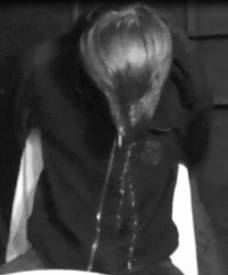
When creating our crime thriller we decided that our location would be isolated and secluded because that builds tension and anticipation. We also decided that the location has to be reasonably small and dark so it creates the effect of claustrophobia and mystery. In the end we decided to film our thriller opening in a shed. The reason why we decided to film our thriller opening in a shed is because sheds are common places and they could be anywhere, you will only ever see the inside of the shed in the opening so you will not have a clue what is outside the shed. This creates tension because the audience will not have a clue where the scene is being filmed. A shed can also be a creepy location if the lighting and mise-en scene is carefully decided.
The main props we used in the scene was the gun and the document which is held by the interrogator and shown to the hostage. The document is used to keep the story going because the interrogator is trying to get more information out of the hostage. The gun on the other hand is very dramatic and it builds tension because without warning the interrogator pulls out a gun and aims it towards the hostages head. This builds tension because the audience knows what the gun is capable and they may begin to feel sorry for the hostage because is cannot get away and he may just be about to be killed.
The only other mise-en scene we included in the scene was a few tools in the corner of the shed and hung on the wall. This symbolises that the shed is an everyday location but the tools in the shed could also be used in a way they normally wouldn’t, they could be used for violence, torture etc. The only other piece of mise-en scene which was in the scene was sheets covering the windows to the shed. This prevented the hostage and audience from being able to see out of the shed as well as people seeing into the shed. The covers add tension and isolation to the scene because it completely cuts off the outside world to the hostage and the audience.
The thriller Se7en influenced our opening greatly, although it is not a crime thriller opening it still uses the same sort of lighting, se7en used dark mysterious lighting which is usually produced from some kind of artificial light, our light source was a lamp located in the corner of the shed facing towards the hostage, it gave out a very similar light effect as the lighting used in se7en. We also used similar sound effect to create tension and grab the audience from the start. For example the credits at the beginning of Se7en are created using props such as notes/ books etc. We used a very similar effect for our opening credits, we used newspaper cuttings to create our names, and we then edited the photos and messed with the lighting to give them a much more effective finish. We also gained inspiration from crime thrillers such as ‘Layer Cake’ and ‘Lock, Stock and Two Smoking Barrels’ because they use similar locations and mise-en scene as out thriller. For example they use isolated locations which are mysterious, they also use mise-en scene such as weapons.
I believe that our thriller opening uses most of the conventional methods and effects which most thriller movies follow. We have built up the tension early on so that we can catch the audience’s attention and keep them interested. To grab the audience’s attention we have used conventions such as lighting and sounds to build up a creepy, scary atmosphere which close resembles the atmosphere from popular thriller movies such as se7en. Also thought-out the opening we tried to capture the characters emotions and reactions so that the audience can feel what they are feeling and feel an emotion attachment to the character, this techniques is very common to thriller movies because thriller movies are designed to get into the audiences mind and make them feel what the characters are feeling. We also edited the thriller very similar to the editing techniques of famous thriller movies such as se7en and Memento.

Wednesday, 8 February 2012

Analysis of 'War of the Worlds'

This shot is an extremely long range shot which shows a character looking up at a storm which is brewing ahead. The camera is slightly looking up at the storm which is swamping the character, this gives the effect that the character is weak and the storm is powerful. All you can here in this scene is the sound of the wind blowing around the character and the constant sound of lightning striking the ground; these sound affects are very dramatic because its load and you can hear the lightning striking close by giving the effect of danger. You can gather from the screen shot that they are located in quite an urban area which also raises the tension level because this weather phenomenon is occurring in a location with a high population level. The scene is lit to represent natural lighting, the clouds are blocking off the sun making the scene darker giving it an eerie affect. There is not much mise-en-scene but you can gather from the characters casual clothing that he was not doing much when this happened, he is surprised and caught of guard because what is happening is extremely rare and just about un-heard off.
This shot is a long range shot which shows a character looking up at something and another character entering from the right. The camera is positioned in such a way so that the audience can get a clear look at the emotion and reaction on the character standing on the left but it also allows the audience to view the character entering from the right. The look on the characters face hints towards shock and disbelievement, this builds tension because the audience wants to know what the character is looking at and why he is so shocked. The man running onto the scene from the right also builds tension because whatever the character on the left is looking at it is attracting more people. The sound for this scene is just the sound of wind rushing around the character and the sound of lighting striking the ground near the character, the sound of the wind gives the effect that a sort of storm is occurring and the sound of the lighting striking the ground nearby gives the effect of danger. You can also see leaves in the background flying around, this builds on the effect that it is very windy. The lighting for this scene is natural, it is not a bright as it usually would be with a clear sky but there appears to be no artificial light. From props in the background such as the three chairs you can gather that the location is probably a home and they are standing in their back gardens. Also the clothes which the character on the left is wearing shows the audience that he was probably just at home like usual until something happened which caused him to stare up at it in such disbelief.
This shot is a medium shot because it shows the top half of the character but it also shows what they are looking/ interacting with. The camera appears to be reasonable angled down so that the audience can look inside the box which the character has just opened. Once the audience see’s the gun they will begin to realise what soft of situation this guy is in because he feels the need to get a weapon to protect himself. In this scene all you can hear is the character rushing around and opening the box which contains the weapon, you can also hear the hard/ deep breathing of the character. This builds tension because the audience will begin to understand how the character feels and how stressed he it. As you can see from the shot the character is situated in some kind of room which appears to be a bed room. This gives the effect of that whatever is happening is being brought straight into ordinary peoples lives, and they feel threatened enough to take up arms. The lighting in the scene appears to be natural because the glow of artificial lighting is not present. You can also tell from the characters face that he is scared and worried about something, this builds up the tension because the audience is once again getting a feel for how the character feels mentally. The character also doesn’t hesitate when taking the weapon, this gives the effect that the character is willing to do anything to survive or protect himself/ others.
This shot is an extremely long range shot because it shows a monster/ robot far in the distance making its way over to the people who are situated at the foreground of the scene. This scene is basically split in two, it is made up of a foreground which includes hundreds of people lining down a street and it includes a background where a monster/ robot can be seen making its way towards the people. This shot creates tension because as the monster/ robot appears on screen and begins making its way towards the crowd of people you know that they are in danger. The camera is placed rather low down so that the audience can see the long lone of people but they can also see the monster/ robot in the distance towering over all of the people. This shot unlike the other three is not based on a single character it is based on hundreds of characters because you cannot differentiate the people apart so you feel for all of them because you know that the main characters are in there somewhere. All you can hear in this scene is the sound of a megaphone addressing everyone in the queue and the sound of everyone screaming and scrambling because they have seen the monster/ robot in the distance and they are worried for their safety. This builds drama because you can hear everyone freaking out giving the effect that everyone is worried and knows what is going to happen to them. The lighting for this scene is mostly natural with a few artificial light positioned down the street to give the effect that they are located in a high street. In this shot you can also see shop fronts with there signs and telephone/ power lines connecting them, this builds on the effect that they are located in an every day location. In this shot no props can really be seen because the camera is positioned to far away from the crowd, you can see though a road block which has appeared been placed there to keep the crowd under control. Overall this shot is very dramatic because it shows people and the threat all in one. By now the audience will know what the threat is and what it is capable but they will be caught off guard by this scene because there are so many innocent people about to be killed.

Mise-en-scene Screenshots & Mise-en-scene used in out thriller opening

Café scene from movie ‘American Gangster’. This is a long shot showing the boss of the gang talking to his brothers/ cousins etc. The shot is based in a rule of thirds because the main character is located in the centre of the shot with the sub characters located to the left and right of the shot. You can tell that the person in the middle is in charge because everyone is sitting around him, focusing on him.

In this scene there a multiple props but all of them are not major and related to the story they are just props used to give the scene a more realistic touch. For example most of the props in the scene consist of café prop such as plates, cutlery, food, glasses etc. The clothing that the people are wearing gives a big clue to who is in charge. The person sitting in the middle of the table is wearing much more smart clothes hinting towards his power and authority. On the other hand the people sitting around him are wearing casual clothing which gives the impression that they are working for the person sitting at the end of the table.

Shot of suspect kneeling in between two police officers/ detectives, from the movie ‘Law Abiding Citizen’. It is a long shot showing the suspect being questioned by police officers you can tell the two officers are in charge because they are looking down at the suspect and the suspect is looking up at the two officers. The two officers look slightly annoyed; I can gather this because the facial expression of the officer on the left hints to him being annoyed/ fed- up for some reason.

This shot does not have much mise-en-scene but the clothing in the scene gives the audience an idea of who each person is and what they are doing. For example the two officers either side of the person kneeling on the floor are wearing coats and smart uniform which hints to the fact they are police officers or detectives. The person kneeling on the floor is wearing very basic prison uniform and a pair of handcuffs, this shows the audience that he is a criminal and he has been arrested and sent to jail.

Shot of man carrying 2 double barrel shot guns on his shoulders, from the movie ‘Lock Stock and Two Smoking Barrels’ . This is a medium shot because it shows half of the man as well as the two guns resting on his shoulders. The camera is also angled up so that we are looking up at the character, this hints towards power, control etc. Also his facial expressions hint that he is determined and he knows what he is going to do, he is in control.

This shot is quiet dramatic in the way of mise-en-scene because although there are not many props uses in the shot the props which are used build tension and drama. The main props in the scene are the two shotguns resting on the characters shoulders; these are very effective because people link weapons to violence and death and this character is carrying two weapons on his shoulder very calmly hinting towards what might happen next. The clothes the character is wearing also gives away what sort of person he is, he is wearing a leather jacket and a white shirt with a gold necklace, this gives the impression that he is quite a rough character.

Man standing in front of burning oil well, from the movie ‘There Will Be Blood’. This is a long shot showing the man and what is going on in the background. The camera is slightly angled up so that the whole of the shot can fit into. It also shows what is clearly going on in the background (fire, cloud, smoke etc). You can tell that the man is startled because of the way he is standing, what is going on is obviously not suppose to happen.

In this scene there is not much mise-en-scene but what there is hints towards what has happened. The main prop in the scene is the wooden stairs and platform which has fire exiting from the top, this builds tension because it is dramatic and something has obviously gone wrong. You can also tell that something has gone wrong because to the left of the wooden platform is a large pile of burnt and charred timbers which probably use to be part of the platform to the right. The audience can see from the pile of burnt out logs that a large amount of damage has been caused and the fire which is raging on top of the platform has probably caused the damage. The character looking at the devastation is dressed in rough clothing which has obviously been through a lot because it is all dirty and messed up, it is clear that he has been working around  the fire because his clothing has clearly been working around the conditions.


Mise-en scene used in our thriller opening

The mise-en scene which we have decided to use in our thriller opening is very similar to the mise-en scene used in the ‘Lock Stock and Two Smoking Barrels’ shot and the ‘Law Abiding Citizen’ shot. For the suspect’s clothing we have decided to use casual clothing which gives the impression that the character is not part of an organisation such as the ‘police, detective’s department’, we are trying to get the same sort of clothing effect as the character in the ‘Lock Stock and Two Smoking Barrels’ shot. On the other hand the interrogator will be wearing clothing very similar to the two officers in the ‘Law Abiding Citizen’ shot; we have decided to go with this clothing set-up because it gives the impression that the interrogator is organized and part of an organisation such as the police, detective department.
For props we are using only a handful of major props and a few background props, to build up the atmosphere. Throughout the thriller only four props will be used, the first one being a piece of paper with writing on it and 3 photos clipped around the outside. We will be using this prop as a type of evidence that the interrogator will use against the suspect. The second prop that we will be using is a gun which will appear right at the end of the thriller opening. Once the interrogator has gained enough information from the suspect he will pull out a gun and aim it towards the suspects head. We decided to use this prop because it is very dramatic and it grabs the audience’s attention because they will want to know what happened which lead the suspect being captured and if the interrogator actually pulled the trigger. Throughout the whole Thriller a chair remains in the centre of the location, we decided to use a chair because it allowed us to tie the suspect to it allowed us interrogate and torture the suspect. Although the chair is very important to the scene it is not noticed as much as the document and the gun.
The last main prop which used was the large bucket which was used to torture the suspect, this prop is not as important as the other two and not much attention is paid towards it. After the interrogator is finished with the bucket he picks it up and places it to the side and it is not seen again.
We decided to keep background props to a minimal because we wanted the audience to keep their attention on the interrogator and the suspect not the props placed in the background. There are two sets of props which we used in the thriller, first being the tools stacked in the corner of the shed. We placed these there because we didn’t want the back wall to be so plain and it added effect because it showed that the shed was a working place and the tools left in the corner could also be used in a violent way. The second set of background props we used are the tools hanging on the wall on the opposite side of the shed to the tools stacked in the corner of the shed. We hanged the tools on the wall for the same reason why we stacked the tools in the corner of the shed, we added them because it didn’t leave the setting to plain and it added effect because the tools show the shed is a working area and the tools alike the others could also be used in a violent way.

Summary of Genres

Movie Genres is a way of separating different movies apart depending on how they are constructed and portrayed. Genres are important because it allows people to differentiate movie apart just by reading what genre they have been allotted.
After movie Genres there is something called a Sub Genre, a Sub Genre is basically a smaller not as well knows movie Genre which is derived from a main movie Genre.
Lastly there is something called a Hybrid Genre (or Cross Genre), a Hybrid Genre is basically a combination of main Genres and Sub Genres that is used to create an entirely new genre, such as ‘Supernatural Drama’.

Below is a list of movie Genres with an example…

Action – Die Hard
Adventure – Apollo 13
Comedy – Super Bad
Crime – Law Abiding Citizen
Detective – Vertigo
Fantasy – Alice in Wonderland
Gangster – Snatch
Horror – Alien
Love – Wuthering Heights
Science Fiction – Te Fifth Element
Drama – Schindlers List
Thriller – Psycho
Animation – Simpson’s Movie
Western – The Great Chain Robbery
Musical – The Jungle Book
Fiction – Transformers

Research and Summaries of the Thriller Genre

A thriller is a book or film which is designed to keep the audience on edge and alert, they do this by using suspense and tension. There are numerous different types of thrillers but one of the most common is the ‘Psychological Thriller’. Psychological Thrillers use mental states not physical states to create their tension, usually the story revolves around an individual trying to resolve conflicts within their own mind. For example the movie Memento is about an individual trying to figure what has happened to him in the past, he is also battling a conflict within his mind because he cannot remember what happened. Psychological thrillers also use physical actions to express the way the character is feeling mentally, these techniques it used in most thrillers because it allows the audience to understand what sort of emotion the character going is thought just by watching physical actions.

Sounds are also widely used within thriller movies because they can be used to set the scene, for example if something dramatic is going to happen then the music usually shows it, this techniques keeps the audience on edge because they know that something is going to happen. Mise-en-scene plays a massive part within thriller movies because they can set the scene and it gives the set a sense of mystery because the audience is always keeping an eye out for something suspicious, for example in the movie psycho you can see the suspect making their way towards the shower with a object raised in one of there hands. Because the audience can clearly see the object is builds tension because they do not know what the object is but the way the suspect is wielding it gives a clue of how they are going to use it.

Thriller openings are usually very dramatic because they aim to grab the audience’s attention of the start so they watch on. The opening usually includes something important related to the story, for example in the opening to the movie se7en you are thrown straight into the story witnessing detectives looking around a crime scene where someone has been murdered, this scene grabs your attention because you want to know what happened there. Later in the story more is uncovered about the murder.
Also editing is a massive part of creating tension and drama in thriller movies, it is very common for an effect to be added to a scene because it can be used to build tension. For example in the movie se7en in the opening credits an effect is added, this effect makes the footage appear in a darker, brownish colour. This effect is used because it gives the impression that what is being shown is either in the past or future, and it gives the effect of depression because of the colours and effect used.

Thriller movie opening use multiple different camera angles to get across the scene as dramatic and possible. A scene which uses multiple different types of camera angles are much more impressive than a scene which uses one or two different angles because it is much more exciting to be able to see what is going on from different angles. Also camera angles can also be used to give the audience a perspective on something, for example if the camera is looking down on someone it gives the effect that they are weak and susceptible, and on the other hand if the camera was looking up at a character is gives the effect of strength and power over the other characters. Camera angles and shots can also be used to capture emotion and mental feelings, for example a close up on a characters face can be used to show their emotion and feelings.

Also a lot of thriller films are structured different, most film types follow a linear storyline where everything is in order and makes sense. But some thriller movies follow a non-linear storyline, this is when the story is muddled up and not placed in the correct order, for example the movie Memento is not in order and it is made up of multiple different clips from different times showing different stages in the overall story. They do this because it gives the audience a challenge, the audience is constantly tying to put the film together so the can figure how it is actually suppose to go, the start of the movie Memento shows the ending of the movie but this leaves the audience on a type of cliff hanger because they want to know why that was the ending and what lead up to it. This is a brilliant techniques because it draws the audience into the movie because they know the ending but not the rest of the movie so they want to know what happens.

Thriller movies opening usually included tiltes which include the name of the film, the company behind the film and all of the producers/ directors involved in creating the movie. Usually depending on the sub-genre of the thriller movie titles are usually portayed differently. For example for the pshychological thriller se7en the titles are made up of handwritten text which when paired with the eerie sound effect create a tense setting. The titles also have an effect on them which makes them appear as if they are out of an old fationed film. Although the titles are a small part of the movie they are important because they dont just inform the view about who the product/ director is etc it can also be used to set the scene/ atmosphere.

All of the effects and techniques which I have mentioned above all used in mostly all thriller movies because they are perfect at creating tension and drama which makes a thriller movie so interesting to watch.